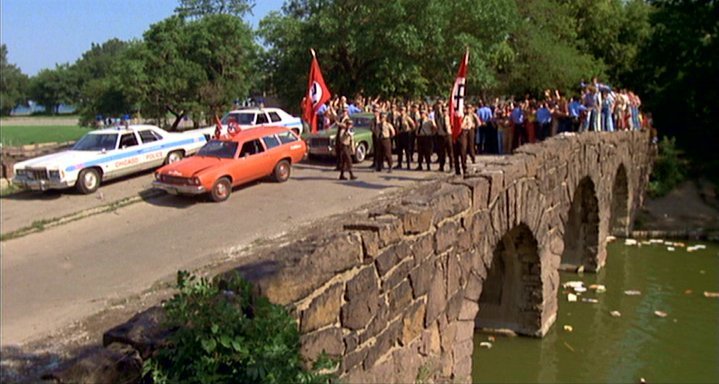
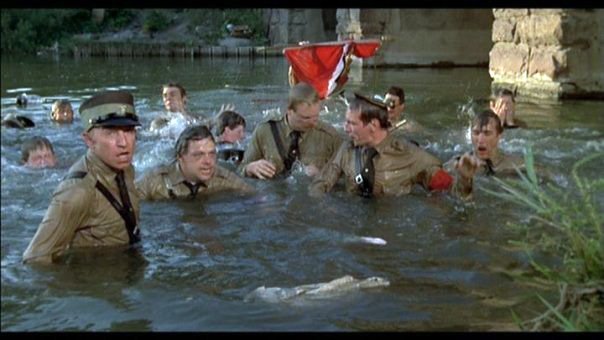
An older relative I grew up with had a troubled adolescence, which included a flirtation with national socialism. Thankfully he never became a Nazi per se, but he had some friends who were actual Nazis, like in the 1980 Blues Brothers movie. One day, perhaps in 1971, one of them came to the house while I was watching cartoons and asked if I noticed they were of lesser quality than before. I said not really, but he enlightened me by declaring "It's the Jews!" Apparently he was referring to the animation quality measure of frames per second FPS), and that somehow "the Jews" decreased the FPS to save money. I doubt he had no actual knowledge of this.
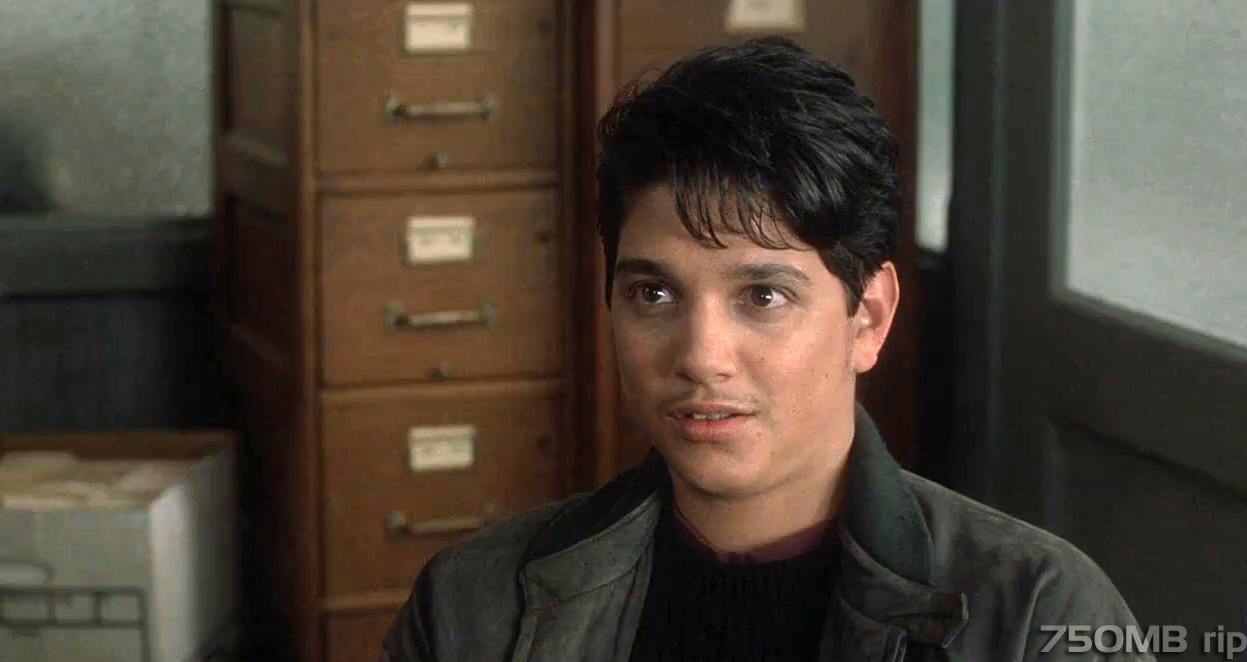
Scenes from the Blues Brothers movie- funny Nazis
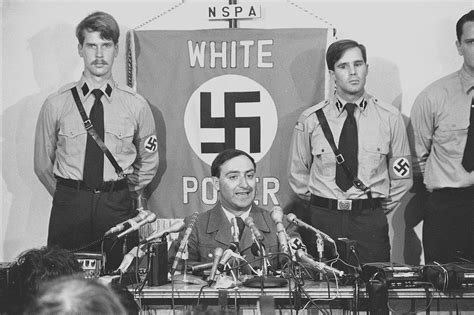
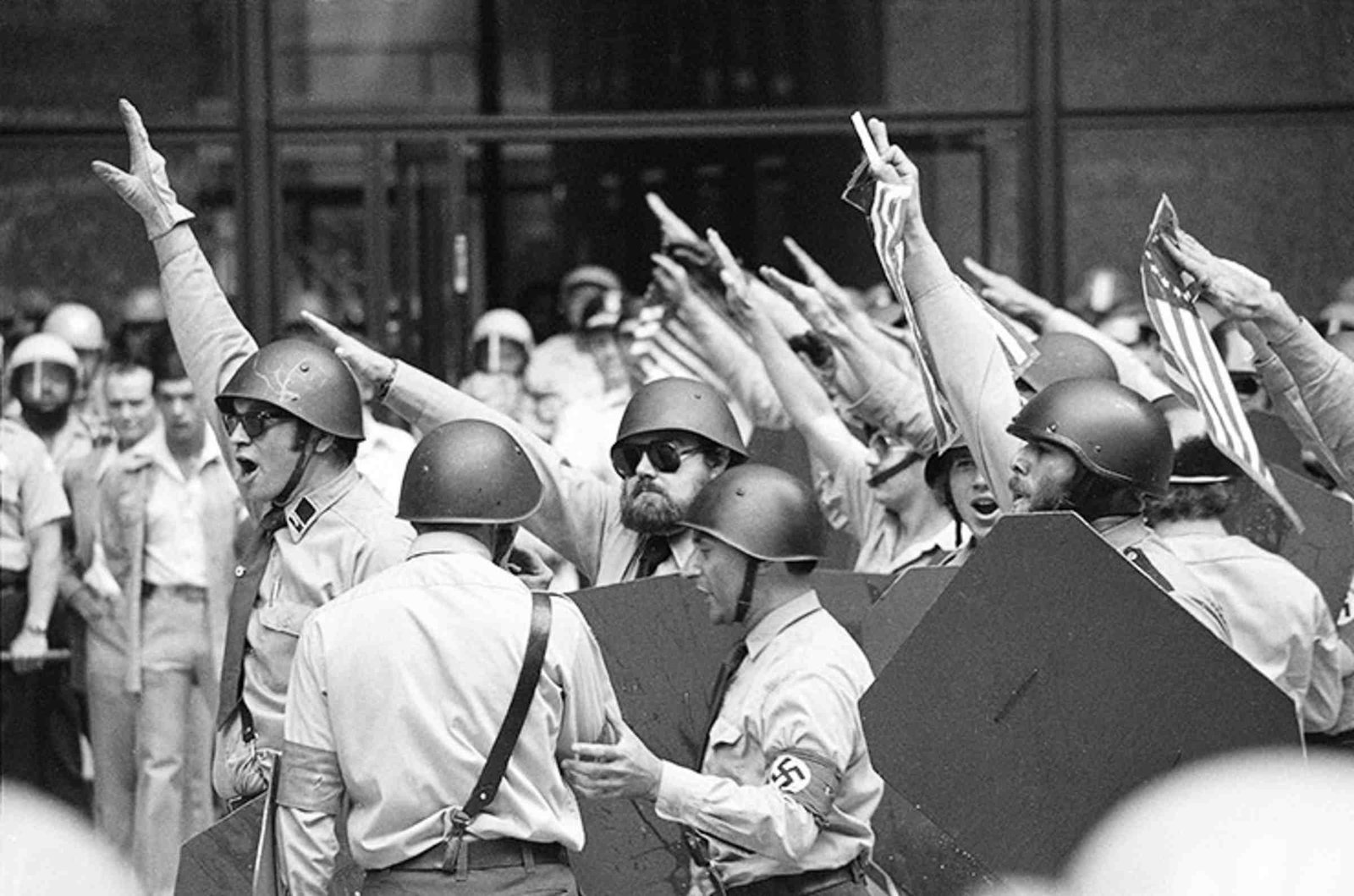
People under 55 or so probably don't realize that long before anyone who disagreed with progressives was a Nazi there wereactual Nazis, notably the National Socialist Party of America (forming in 1970 and dissolving in 1981). They paraded around in Brown-Shirt type uniforms and wore swastika armbands, and were most famous for the pro-Nazi demonstration planned for Skokie, IL (a suburb of Chicago with a large Jewish population including Holocaust survivors) in 1977. Ultimately the demonstration was held in Chicago in the following year, with a whopping 25 Nazis showing up.
Real American Nazis from the 1970s1978 Nazi rally in Chicago
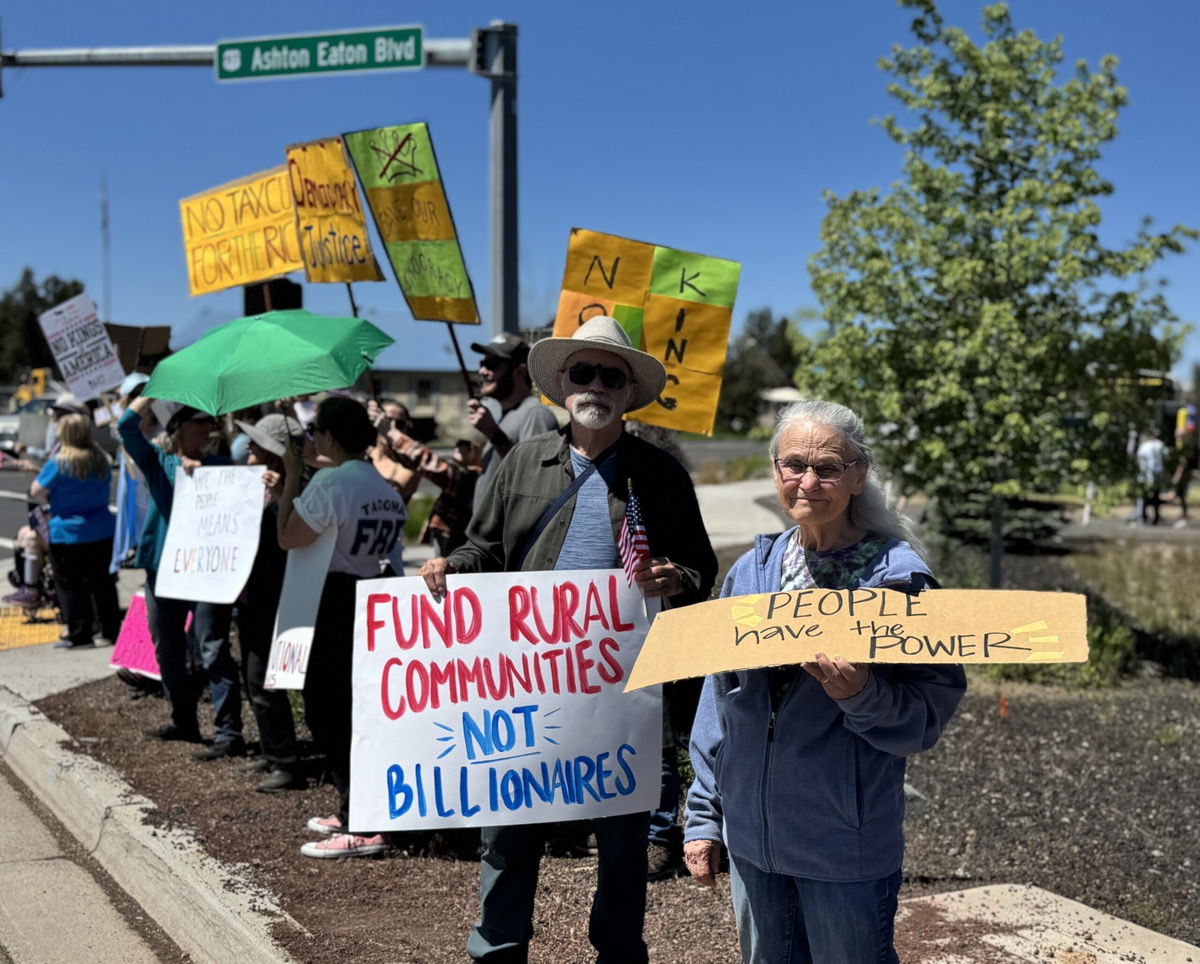
On Oct. 18, 2025 a second round of anti-Trump demonstrations under the banner “No Kings” occurred throughout the US, with several million participants in total. Whether they are pampered hippies (or wannabe hippies) long past their sell-by date desperately trying to relive their youth or intrepid defenders of democracy, No Kings is an interesting phenomenon that warrants a closer look.
Older lady with pink hair at the June 2025 No Kings protest; Elderly people at No Kings protest
There is a sense of personal liberation in being unburdened by thought and the pursuit of knowledge. If one can avoid uncomfortable experiences and banish from their sphere annoyances like different perceptions and opinions, they are freer to engage in self-gratification and pleasure, such as watching streaming TV, caressing an Iphone, sipping crafted coffees, getting tattoos, attending various protests, and all-in-all having a good time. If someone can dispel and render moot disagreement with their world view using a single word or mindless phrase, so much the better. After all, having to come up with a well-reasoned argument to support a position can be hurtful to the brain of certain people.
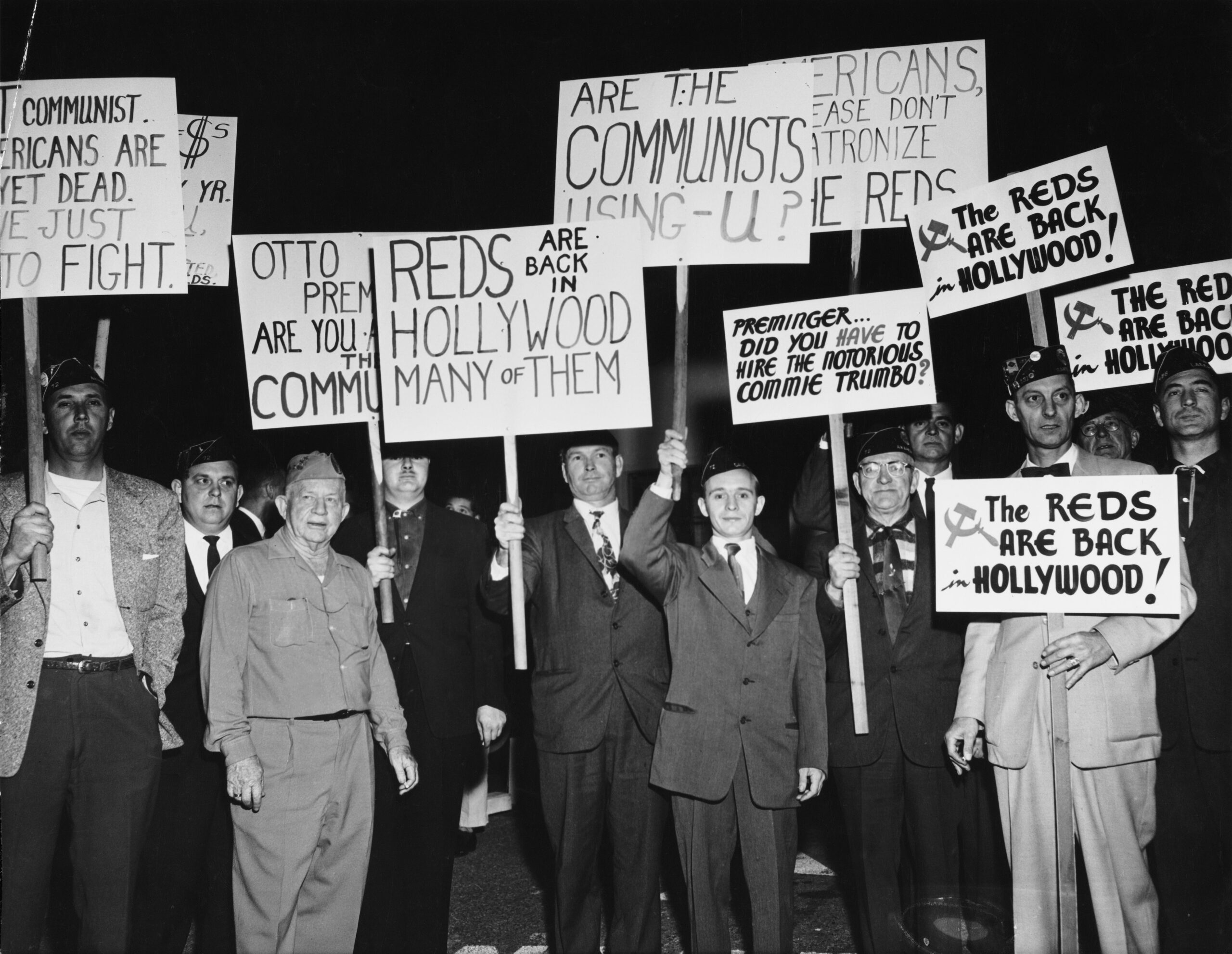
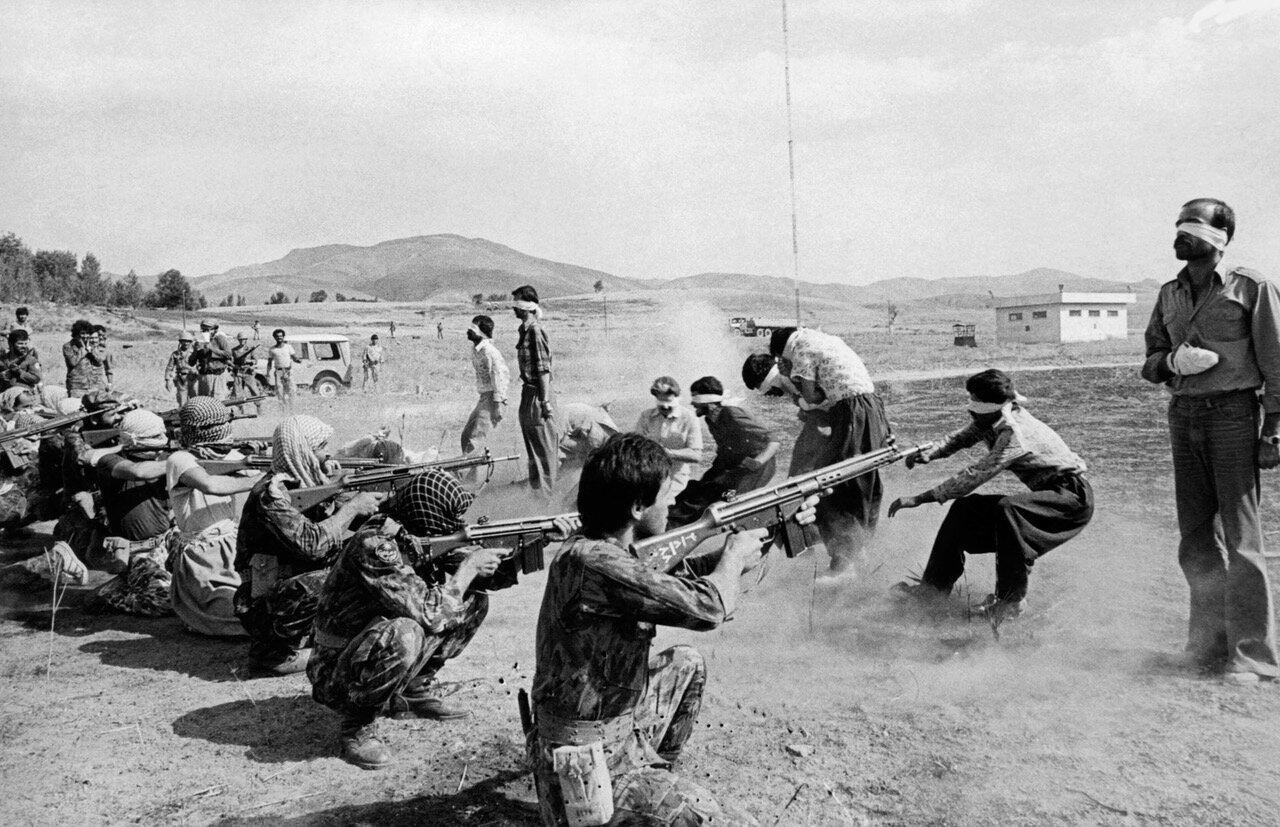
IRAN. August 27, 1979. After a short show-trial, 11 people charged as being "counterrevolutionary" were executed at Sanandaj Airport. Nine of the eleven men in this photo were Kurds. This photo won the Pulitzer Prize in 1980. The recipient was known as "anonymous" until 2006 when Jahangir RAZMI told the Wall Street Journal that he had taken it.Left: Anti-red rally in the 1950s Right: One way to deal with people you disagree with in the newly created Islamic Iran, Aug. 1979
This approach goes back to ancient times and continues to the present. In the historic dark days of Christianity, for example, one merely had to make the accusation of heresy or witchcraft and the person who didn’t fit comfortably in your insulated world was gone, often literally. Or in the current dark days of Sharia Islam where calling someone an infidel can have a similar result. In the US, this isn’t necessarily a political right/left phenomenon, and there are recent examples of of it being used by putative conservatives: during the post-WW2 “red scare” it didn’t take much beyond accusing someone of being “red” or a “commie” to have a real negative impact on their lives. Presently, and for the past decade or so, this approach has been on the ascendancy with the progressive left, and is ubiquitous today.
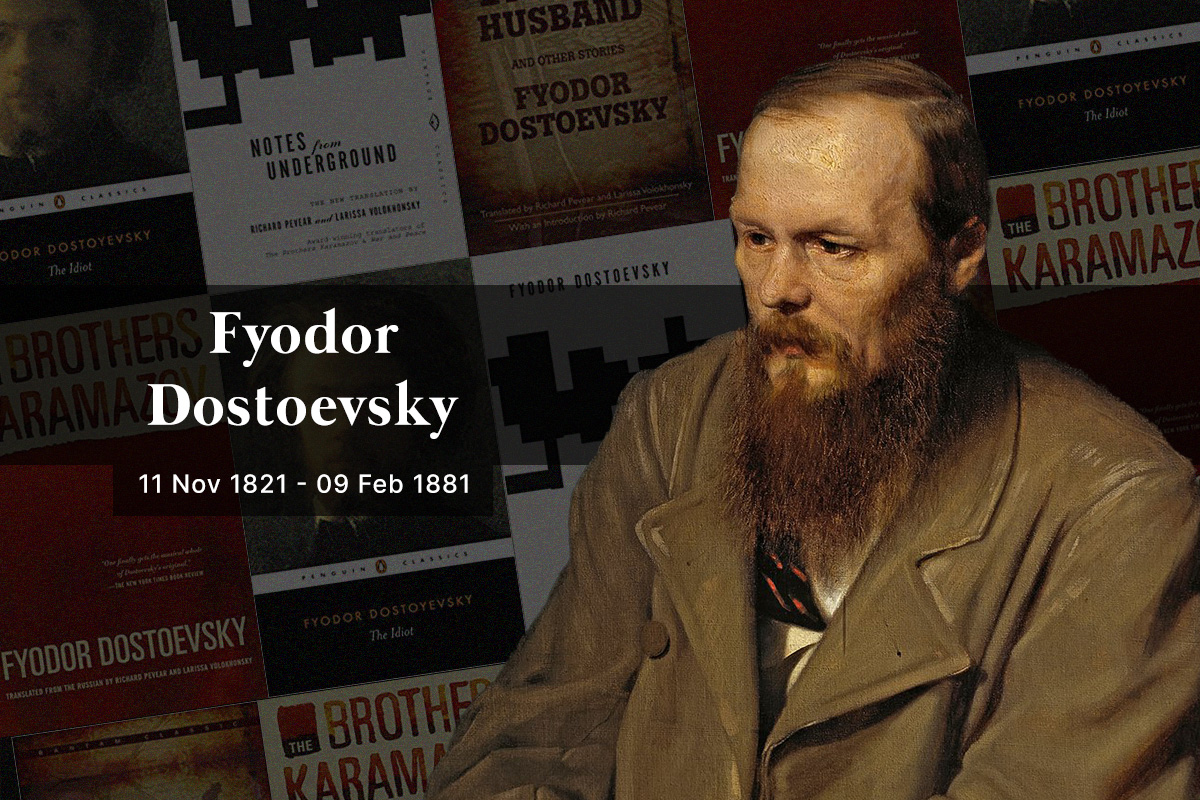
My first semester of college: Jan. 1977, Univ. of Wyoming, English 101, required reading included The Brothers Karamazov by Russian author Fyodor Dostoevsky (1821-1881). I have to confess my reading practices were limited to newspapers, Reader’s Digest, and the bare minimum for school, and a 100 year-old, 800 page novel was just too much. In my juvenile mind refusing to read it was an act of resistance and the subsequent F was somehow noble, but I knew I was really just lazy. My reading habits changed significantly over the following decades, so I can say, for example, if you feel you need to read War and Peace by fellow Russian author Tolstoy, it’s really awful- a feudal soap opera, with lame dialogue such as Princess whatever saying “He (Prince something or another) loves me, he REALLY LOVES ME!” Admittedly I don’t think of Dostoevsky often but ran across his name recently in a modern cultural/political context (next paragraph) and this prompted me to begin his other great work, Crime and Punishment; so far it’s not too bad.
Dostoevsky experienced a mock execution when he was 27, then was banished to Siberia for 10 years
A few weeks ago I noticed a posting from a “Facebook friend” of a quote attributed to Dostoevsky: “The more intelligent the man the more he begins to notice suffering.” If you think about this, there is more than subtle arrogance associated with the implied sentiment. I tried to “fact check” it and reviewed dozens of quotes by Dostoevsky and could not find it, so maybe yes, maybe no (an 18th century German philosopher- Arthur Schopenhauer- seems more likely). Nevertheless, invoking a quote, correct or not, by Dostoevsky hints at a high degree of education and sophistication, which perhaps is the goal.
I heard from a Federal Government employee, no fan of Trump, who quoted from Trump's nominee for Director of the OMB (Office of Management and Budget) and took issue with what he (the nominee) said- “We want the bureaucrats to be traumatically affected, When they wake up in the morning, we want them to not want to go to work because they are increasingly viewed as the villains. " That's a pretty harsh statement and the question is, "Are bureaucrats and civil service employees the same thing?" Being a retired civil service employee, I think- and hope- the answer is no. Below is my response to his concern.
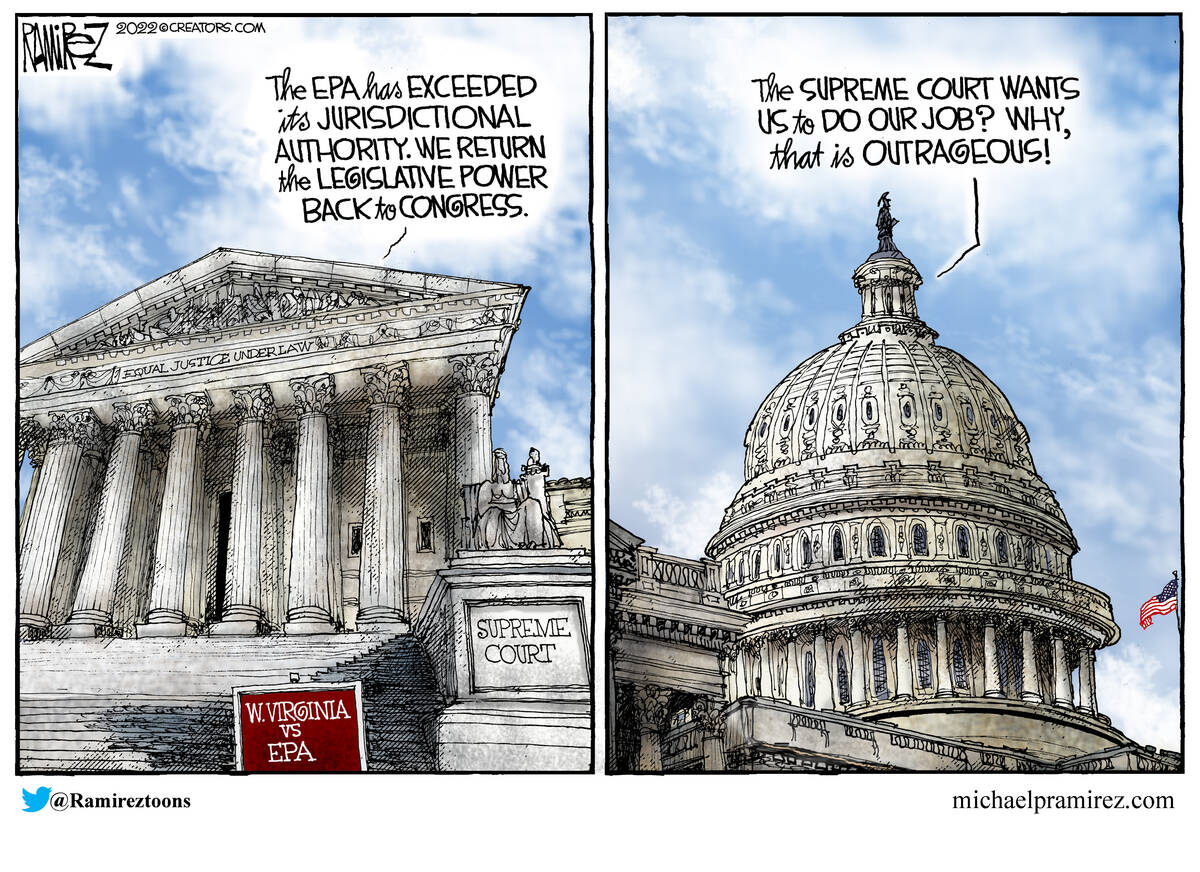
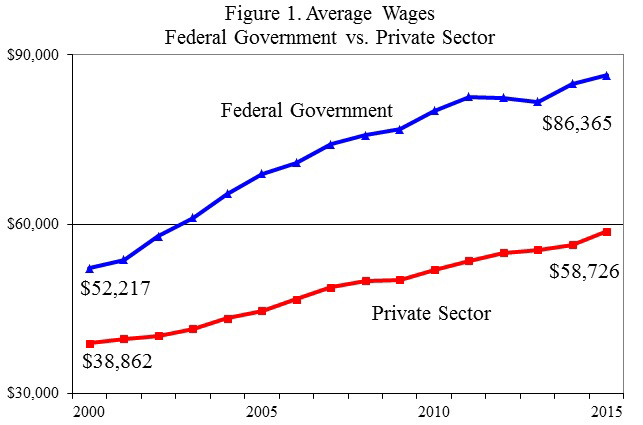
Left: a cartoon suggesting that Congress has largely ceded its responsibility to unelected and unaccountable bureaucrats who make decrees that are viewed as law. Right: many government employees- civil servants- have important functions, and overall they are generously compensated.
Picture yourself at a generic social gathering where someone you just met blurts out, “Don’t you thank God everyday for sacrificing His Son to pay for our sins!” If you are a fellow believer you might respond with “Praise the Lord,” or, if you are an anti-Christian progressive activist type who craves being offended, you might say, “Don’t force your beliefs and your fascist pretend god on me!” Or, if you are a reasonably mature and sensitive person, you might think “That’s kind of an inappropriate thing to say to someone you don’t know” and try to politely redirect the conversation.
In terms of the person making the statement, what are their motivations? It’s certainly possible they assume everyone believes as they do, which is kind of arrogant. Maybe it's a kind of religious virtue signaling. More likely, it’s simply something very important to them to and they just can’t filter their words from their thoughts. It’s extremely doubtful that a non-believer would have an epiphany and cry out “Save me Jesus!” What’s more likely is their audience would think, “That really doesn’t do much to advance their cause.”
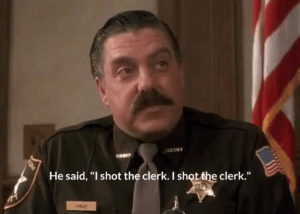
A scene in the excellent comedy My Cousin Vinny involved a young man who, when asked by a cop “when did you shoot the clerk?,” responded with an astonished “I shot the clerk??” He, of course, didn’t shoot the clerk, but his “statement” was treated as a confession.
Left: the scene from My Cousin Vinny where Bill Gambini's (Ralph Macchio) words are misinterpreted by the police and (right) claimed to be a confession
On Labor Day weekend I visited someone I’ve known all my life but never spent much time with; I should add he’s a truly decent guy. I never bring up politics in social situations such as this and had no idea of his leanings, but he mentioned he detested Trump to the point he thinks he should be executed. I asked him why he felt this way and he vigorously mentioned atrocious things Trump has been to reported to say, stating emphatically in some cases, “I heard him say it!” The following discusses some of the egregious and hideous statements attributed to Trump, including those the person “heard” that led to his extreme hatred of Trump, and what the truth actually is.
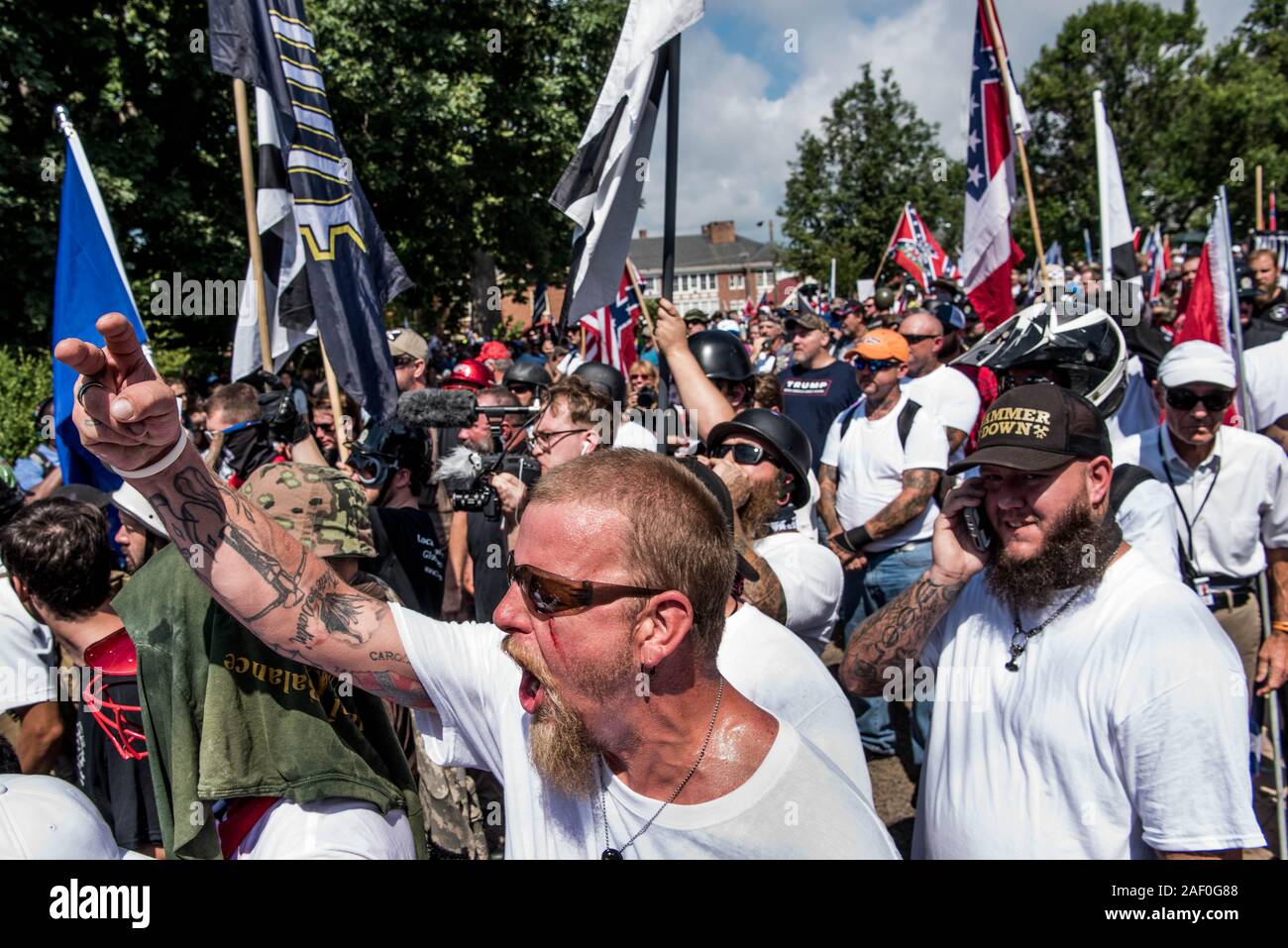
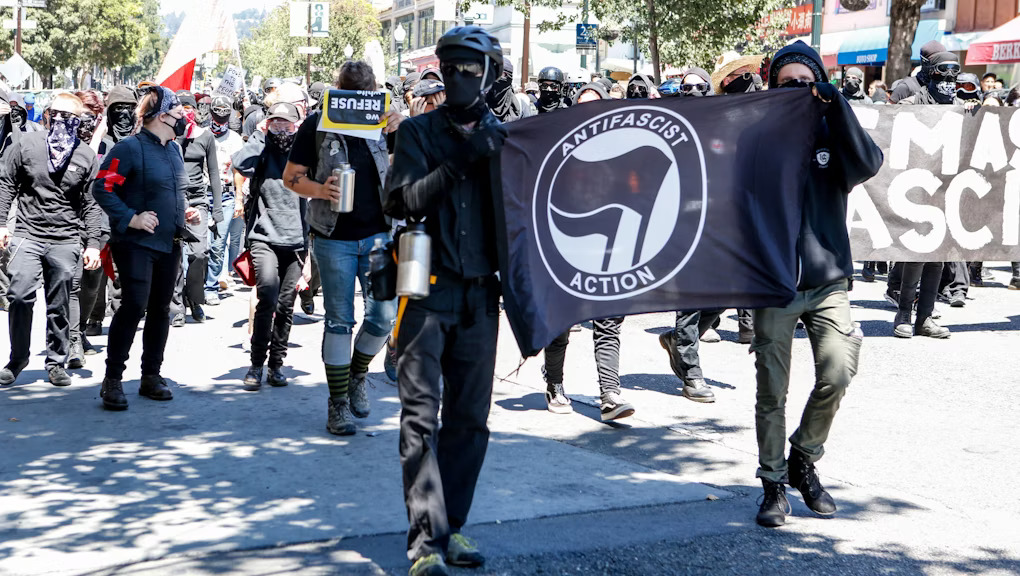
Two sides of the same coin: white supremacists and masked left wing fascists (curiously calling themselves "antifascists") in Charlottesville, VA August 2017
Charlottesville,VA. In August 2017 there was a “Unite the Right” rally which quickly devolved into violence between protesters and counter-protesters. Several days later Trump was asked about this during a news conference. Included in his response to the loaded question, “Mr. President, are you putting what you're calling the alt-left and white supremacists on the same moral plane?” was a mention, “But you also had people that were very fine people, on both sides.” This was immediately reported as Trump claiming Neo-Nazis and white supremacists were very fine people, and elicited outrage among the usual suspects, including the Democrat party leadership and the media. Joe Biden has repeatedly stated this was a major factor in his seeking the presidency, and is to this moment being used by the Democrat nominee, Kamala Harris, as an example of the hateful nature of Trump. Of course, Trump specifically condemned the Neo-Nazis and white supremacists a few sentences later: “I'm not talking about the Neo-Nazis and the white nationalists, because they should be condemned totally,” yet this total lie was and is being propagated by those who so passionately seem to hate Trump. And, like so many lies, intentional misrepresentations, and fabrications, have proven very effective.
Once in a while you’ll see an older guy in a store wearing a hat the says Vietnam Veteran. If you do consider this for a moment, you’ll probably assume he is, indeed, a Vietnam vet. If you pause a little longer, you might imagine what a profound impact this experience must have had on him over a half century ago when he was a young man, perhaps just out of high school. I fear the significance of serving in a war is being lost on us as a society overall, relegated more to a video game mindset: The share of the U.S. population with military experience has declined, according to data from the US Census Bureau. In 1980, about 18% of U.S. adults were veterans, but that share fell to 6% in 2022.
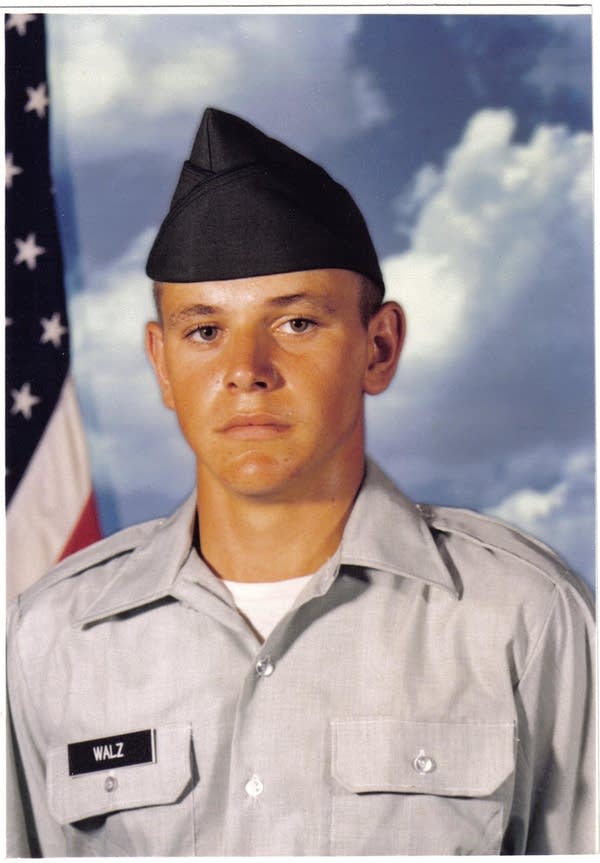
Tim Walz photo from Army basic training 1981; wow: on the right the corresponding photo of me from1976
There is a person named Tim Walz, the current governor of MN who was recently declared to be the Democrat’s candidate for Vice President. While Waltz is among the most extreme leftists in the Democrat party, he fits the bill for a slightly older non-homosexual white guy, designed to balance the ticket headed by a lady who is pretty much white but portrays herself as black, and is an equally extreme leftist. This article, however, is not to discuss the extremism of this duo and the party they represent, but to explore a specific fraud they hope will be ignored or successfully glossed over, that being Walz’s military service. It should be acknowledged without reservation that he was a member of the Army National Guard for 24 years. He retired in May 2005, and came darn close to having served honorably.
by Reid Fitzsimons (this article was written as a Letter to the Editor of a small local paper, the Susquehanna Transcript, as a response to an earlier anti-Trump letter)
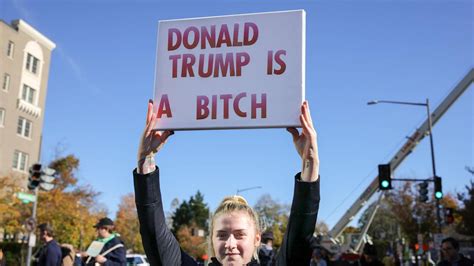
Sometimes we love too much, and sometimes we hate too much, to the point the object of our love is perfect and flawless and the object of our hate is vilified in totality. These feelings can be personal, and not infrequently political. Extremes in love and hate might feel satisfying, but too often feelings overcome reality, and make us believe and do stupid things. The June 12thissue of the Transcript contained a letter from a nonagenarian residing in Uniondale entitled Assimilate 201. It was a little difficult for me to follow, but it was clear the writer is no fan of Donald Trump, and her inaccuracies and falsehoods presented as fact, both small and significant, suggests she hates Trump a little too much.
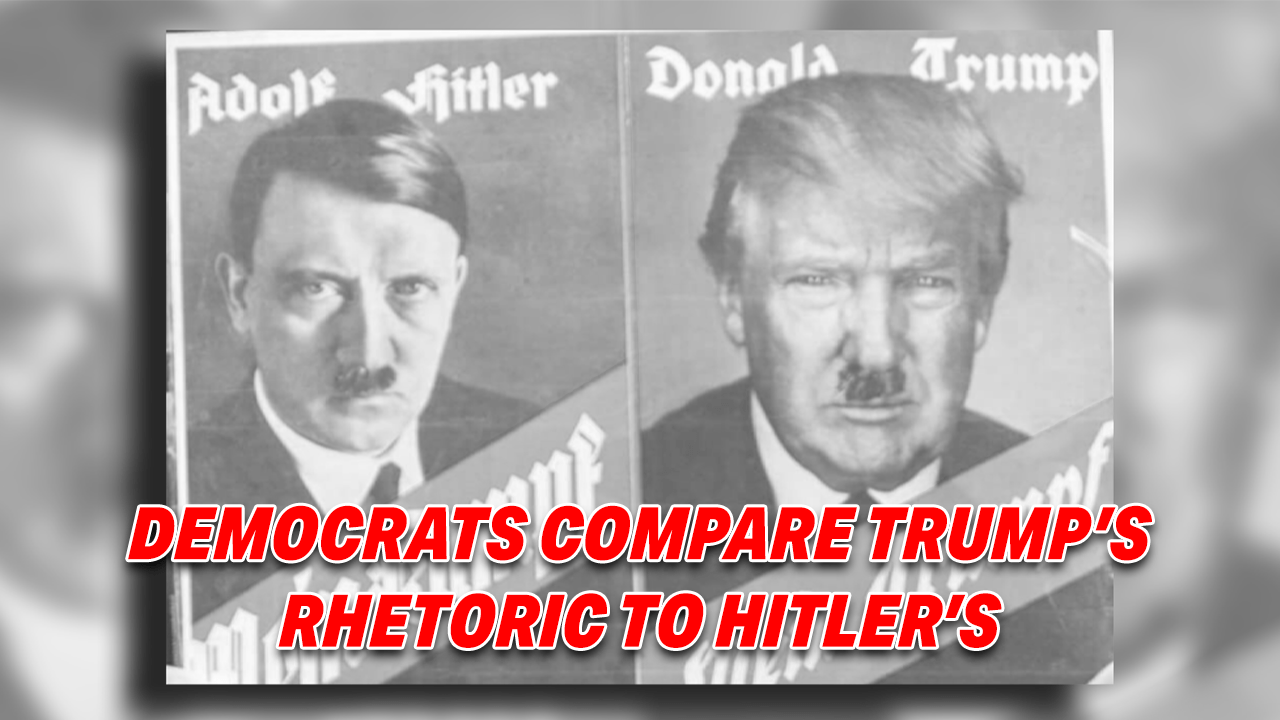
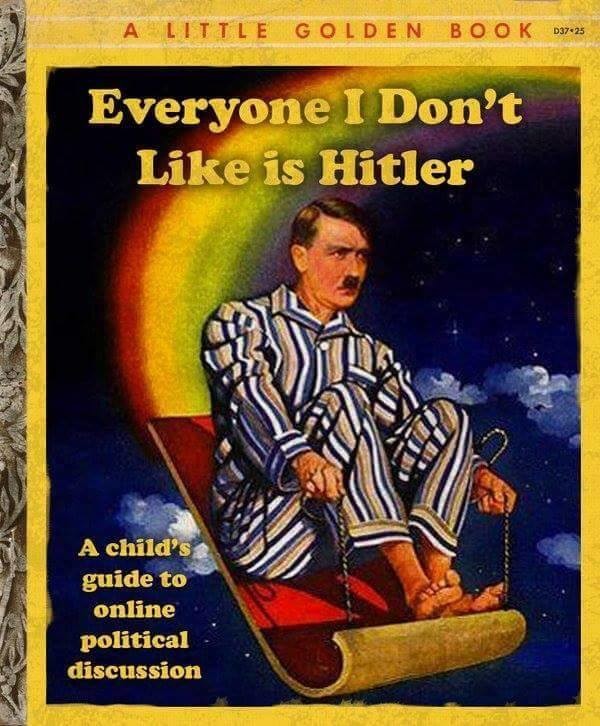
Hitler is the go-to comparison for people Democrats don't like
She claims Trump called immigrants “vermin,” then segued into a predictable comparison to Hitler, mentioning that, “In case you didn't know, Hitler killed 8 million mostly educated Jewish people in large gas ovens.” It’s not a huge point, but I don’t think Hitler really cared about the educational level of the Jews he had exterminated, and for historical accuracy, the accepted Holocaust figure is 6 million. The mention of killing so many people in “large gas ovens” likewise is inaccurate: the Nazis used a variety of methods to kill Jews and other demographic groups- large ovens were typically used in concentration camps to efficiently incinerate the bodies (and perhaps hide evidence of their atrocities) after they were slaughtered. This may seem a petty point, but if someone is using historical comparison to make a political point it should be reasonably correct.
Every once in a while some hapless Republican is excoriated for suggesting some version of, “Well, Hitler did some good things,” a statement often quoted without context. With the exception of a handful of neo-Nazi morons and a frighteningly larger number of anti-Jew extreme leftists (who do their anti-Jew things with tacit support from establishment leftists), pretty much nobody thinks Hitler did anything overall “good,” but from a historical perspective, it’s not unreasonable to ask, “Did he do anything that could have been perceived as “good” that rallied millions upon millions of people to support his ascendancy and policies?” This is an important question for this moment in time, as there are worrisome indications the world is once again turning to authoritarianism.
So...how did Hitler obtain absolute power in Germany? Undoubtedly there have been innumerable papers and books on this subject, but ultimately the answer is as old as history and is in play to this very moment. For brief background, Germany was in shambles following its utter defeat in WW1. The victorious allies, acting on understandable emotion but with little wisdom, forced upon Germany a repressive and retributive agreement called the Treaty of Versailles (www.britannica.com/event/Treaty-of-Versailles-1919), designed to prevent Germany from ever again becoming a military power. It demanded huge reparations and allotted heretofore chunks of Germany to other nations. Not surprisingly there were wannabe left wing and right wing revolutionary movements and all the chaos they entailed, so the reasonable solution was some form of democracy that came to be called the Weimar Republic (www.britannica.com/place/Weimar-Republic). Nevertheless, great discontent continued and there were vacuums to be filled, and Hitler had the skill to fill the void, and the patience.
Adolph Hitler in 1924 at the age of 35Before becoming a bloodthirsty dictator, Hitler was an artist