
by Reid Fitzsimons
My first semester of college: Jan. 1977, Univ. of Wyoming, English 101, required reading included The Brothers Karamazov by Russian author Fyodor Dostoevsky (1821-1881). I have to confess my reading practices were limited to newspapers, Reader’s Digest, and the bare minimum for school, and a 100 year-old, 800 page novel was just too much. In my juvenile mind refusing to read it was an act of resistance and the subsequent F was somehow noble, but I knew I was really just lazy. My reading habits changed significantly over the following decades, so I can say, for example, if you feel you need to read War and Peace by fellow Russian author Tolstoy, it’s really awful- a feudal soap opera, with lame dialogue such as Princess whatever saying “He (Prince something or another) loves me, he REALLY LOVES ME!” Admittedly I don’t think of Dostoevsky often but ran across his name recently in a modern cultural/political context (next paragraph) and this prompted me to begin his other great work, Crime and Punishment; so far it’s not too bad.
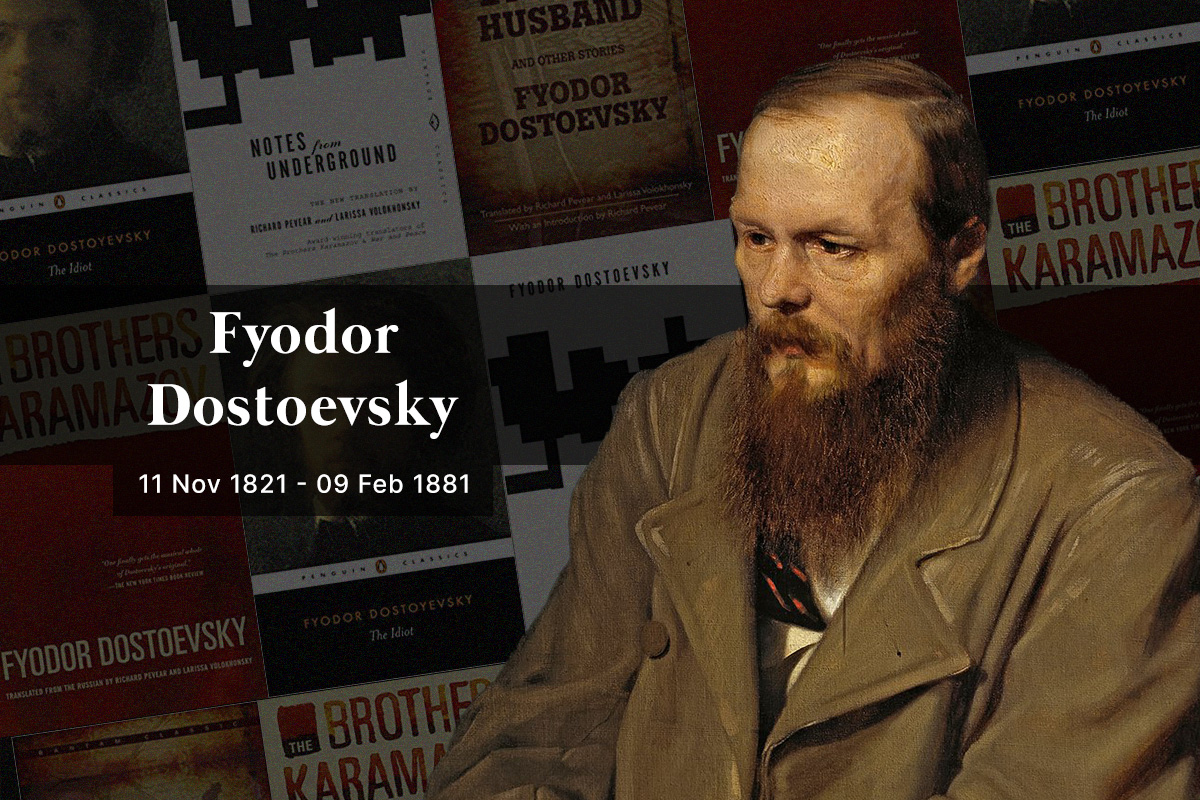
A few weeks ago I noticed a posting from a “Facebook friend” of a quote attributed to Dostoevsky: “The more intelligent the man the more he begins to notice suffering.” If you think about this, there is more than subtle arrogance associated with the implied sentiment. I tried to “fact check” it and reviewed dozens of quotes by Dostoevsky and could not find it, so maybe yes, maybe no (an 18th century German philosopher- Arthur Schopenhauer- seems more likely). Nevertheless, invoking a quote, correct or not, by Dostoevsky hints at a high degree of education and sophistication, which perhaps is the goal.